
Are you an immigrant or traveler planning to relocate overseas from the USA and struggling to figure out how to bring your large dog in the cabin, not in cargo? You’re not alone. The demand for airlines that allow large dogs in cabin—whether medium, large, or extra-large breeds—has never been higher. More US pet owners are searching for ways to fly with their big dogs in cabin because traditional airline pet policies simply don’t meet the needs of those with larger companions. Families and solo travelers alike are actively seeking alternatives to cargo dog travel, motivated by a desire for less stressful, safer, and more comfortable journeys for both themselves and their pets.
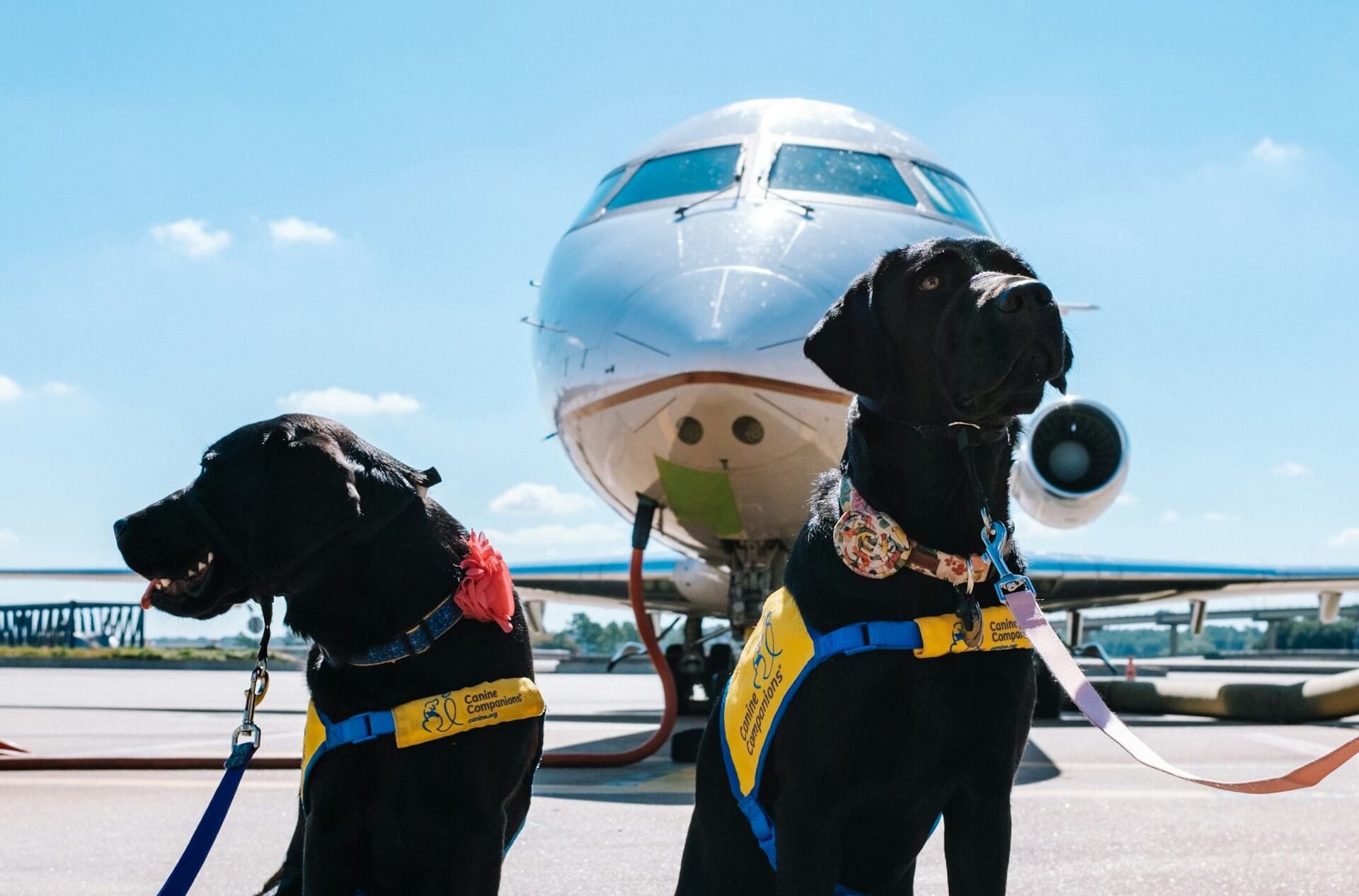
Pet relocation has always come with logistical challenges, but these issues are front and center for Americans moving abroad. Most major commercial airlines only permit small dogs to travel in the cabin—typically under 20 pounds and in a carrier that can fit beneath the seat. This restriction leaves dog owners with medium, large, or extra-large pets facing the unappealing choice of shipping their animals in cargo holds, which is widely recognized as more stressful and sometimes less safe.
Recent Airline Policy Changes Making Large Dog Travel Harder
Many travelers and immigrants recall a time when it was possible to contact certain carriers and purchase an extra seat specifically for a larger dog’s crate. However, those days are largely over.
Recently, Alaska Airlines quietly eliminated a previously available option allowing travelers to check a crated pet as cabin seat baggage—a change that caught frequent flyers by surprise and left many pet owners with fewer options. Major U.S. and international carriers have also tightened their policies in response to evolving safety protocols and increased cabin occupancy, further limiting in-cabin space for anything beyond a small dog or cat.
As travelers comb through forums and social media, a recurring question appears: “What happened to the service for buying an extra seat for your dog in cabin?” In the past, some people were able to work directly with an airline to reserve extra space, but now this workaround is exceedingly rare or simply unavailable on commercial flights. The shift reflects not just a consolidation of airline pet policies, but also a heightened focus on operational efficiency and minimizing exceptions that disrupt standard boarding and seating logistics.
Demand For In-Cabin Pet Transport Options Grows
For families, digital nomads, and adventurers who want to relocate or explore new countries with their big dogs, these restrictions can be a major setback. As a result, many people turn to innovative alternatives—such as semi-private flights and pet charter services—or advocate for new policy changes through online communities.
While mainstream airlines continue to enforce strict size limits for in-cabin pets, the rising demand for more humane, flexible travel options is encouraging specialty providers to fill the gap. Until then, flying with a large dog in cabin remains a major challenge on regular carriers, and those seeking solutions will need to think outside the box and keep a close eye on emerging travel trends.
Semi-Private and Charter Airlines That Allow Large Dogs in Cabin
Semi-private air carriers like JSX operate on a scheduled, pay-per-seat model, blending the privacy and comfort of chartered jets with the accessibility of standard flights. On JSX, dogs weighing up to 79 pounds can travel in the cabin provided owners purchase an adjacent seat for their pet, ensuring there’s ample space for them on the floor during the journey. With dedicated pet protocols, private terminals, and less-crowded environments, semi-private airlines have become a standout choice for large dog owners who value a streamlined, low-stress airport experience.
For those seeking a fully private journey, pet-friendly charter services such as Bark Air and K9 Jets allow virtually any size dog to travel in the cabin. These charters offer flexibility that commercial airlines simply cannot match, letting pets stretch out beside their people and eliminating the stress and risks associated with cargo transport. The experience is tailored, with flights departing from private airports, fewer passengers, and, often, door-to-door service for expat families. Costs for charter flights are significantly higher than commercial fares, but for many, the peace of mind and safety are worth the investment—especially when moving overseas with beloved family pets.
Other standout charter options include Pet Jets, RetrievAir, and Villiers. RetrievAir, in particular, now serves nine U.S. cities and distinguishes itself with transparent pricing—just one seat per dog, regardless of size—and highly trained staff dedicated to pet welfare throughout the journey. Villiers offers flexible global itineraries and bespoke pet services, accommodating every member of the family for luxury relocations, while Pet Jets provides robust consulting and bespoke flight planning for mixed pet manifests and international transfers.
Let’s take a deeper look at all these in-cabin pet travel options…
JSX Airlines: Positive Large Dog In-Cabin Reviews
Customer reviews are overwhelmingly positive, with many citing stress-free travel and pet-focused amenities. JSX consistently receives praise for accommodating snub-nosed and large breeds, setting a new standard for U.S. pet-friendly airlines.
“a seamless experience—Buddy had his own footwell and plenty of space, and the crew made him feel like a rockstar.” -Sandra, who traveled with her Golden Retriever, Buddy
- JSX Airlines is a top choice for pet owners wanting accessible, semi-private air travel for large dog breeds such as Golden Retrievers, Labradors, and German Shepherds.
- Dogs up to 79 pounds are allowed in the cabin, but owners must purchase an extra seat for their pet—and the dog must stay leashed and lay on the floor in front of the window seat for the whole flight.
- Spacious legroom and calm boarding via private terminals make the experience less stressful for bigger dogs and their families.
- The typical price for each seat ranges between $400 and $800, depending on route and demand, and all bookings for large dogs must be arranged by contacting JSX directly.
Bark Air: Luxury Flights for Large Dogs
Bark Air is the trailblazer in dog-first luxury air travel, offering private jet experiences for pets and their owners on routes between the U.S. and top European cities such as Paris, Lisbon, and London. Passengers report that these journeys are as enjoyable for the pets as for their people, mentioning the absence of travel anxiety typically associated with flying.
“Bark Air was the most pleasant and least stressful flying experience ever, for both Theo and us. The staff went above and beyond, and the other passengers genuinely bonded over their pups.” – reviewer flying with a Cavalier King Charles Spaniel
- Dogs of any size ride in the cabin with access to their own seat, socialization time at the gate, calming music, treats, and ear-friendly drinks during takeoff and landing.
- Concierge staff and dog specialist crew deliver exclusive amenities and handle all aspects of the journey, from pre-boarding socialization to on-board relaxation, tailored for each pet’s comfort.
- The price tag is as high as the praise in their reviews. Ticket prices for Bark Air average $6,000 to $12,000 for a one-way international flight.
K9 Jets: Fantastic In-Cabin Large Breed Experiences
K9 Jets specializes in pay-per-seat jet services for families traveling with large dogs on transatlantic routes. The company accommodates breeds of all sizes in the cabin. Feedback from K9 Jets customers highlights the thoughtful boarding process, comfortable seating, and attentive crew. They note that dogs can sit right beside their person, lay on the floor, or even stretch out on the seat with a travel mat, making it an ideal solution for international moves.
“Boarding was smooth—each pup walked outside before the flight and settled comfortably on the jet. The flight crew was prepared for every dog personality and made Coco feel safe throughout.” – traveler with a reactive German Shepherd
- Each ticket entitling a traveler to bring one pet over 23kg (51 lbs), or two dogs each under 22kg (50 lbs).
- Flights operate from major U.S. cities to European destinations such as London and Paris, offering transatlantic service exclusively on Gulfstream jets with intentionally limited seating (up to 10 passengers and their pets).
- Ticket prices generally range from $4,500 to $8,000 per seat, depending on the route, time of year, and demand, with additional support provided for travel documentation and pet health certificates.
RetrievAir: Excellent Large Dog Owner Feedback (Domestic Only)
RetrievAir is quickly becoming a favorite among domestic travelers with large breeds. Customers praise RetrievAir for genuinely caring about pets. On Reddit, many users compare RetrievAir’s value favorably to Bark Air, noting the cost savings and flexible weight rules. Unfortunately, they do not yet offer international flights, which makes it unhelpful to immigrant. However, if you need to fly your large dog domestically to reach the correct airport for your international flight, RetrievAir is an affordable option.
“Flying with big dogs just got a million times easier—their team cares and the process was smooth for my Bernese Mountain Dog. Less hassle, always updated, and our dog came out happy and relaxed.” – customer on a flight from Dallas to Denver
- Praised for its transparent pricing.
- Only offers domestic flights, as of October 2025.
- Each large dog requires their own seat, while dogs under 40 lbs may fly on their owner’s lap.
- RetrievAir focuses on direct routes, cutting down travel time for both pets and humans.
- They use private terminals for hassle-free boarding.
- Their average prices hover around $750 per seat, a competitive rate compared to most other private or semi-private carriers.
Pet Jets: (Expensive) Private Jet Travel with Dogs
Pet Jets offers bespoke private jet services for pet families, handling everything from aircraft selection to flight planning for travelers with large or multiple dogs. Their team works closely with clients, ensuring that breeds as large as Great Danes or Mastiffs can ride comfortably in-cabin on tailored charters.
“Pet Jets didn’t just get us to London—they listened to my concerns about heat for my older Lab and provided the right aircraft for his comfort. Our pups came first, every step of the way.” – customer with a pair of Labradors, including one senior dog
- Pet Jets are available for both domestic U.S. and international routes.
- They have fully customizable amenities to suit specific breed needs and owner preferences.
- (This one is gonna hurt!) Pricing is bespoke but generally starts around $5,000 per hour of flight time.
Villiers Jets: Another Pet-Friendly Private Jet
Villiers Jets offers flexible, pet-friendly private jet charters, allowing clients to fully customize the flight experience for their dogs. They are often chosen by expats moving with giant breeds or multiple pets, thanks to its lack of size or breed restrictions and emphasis on personalized service.
“Our entire international relocation was centered around our pets’ comfort. Villiers let us pick the best jet, customize the cabin, and made sure our dogs were cared for every step of the way. You’re able to interact with your dog the entire flight—no stress, no separation.” – Villiers Jets customer traveling with a pair of Mastiffs
- Owners select bedding, meal plans, and even temperature settings to suit the breed’s needs and ensure complete comfort.
- Villiers is available worldwide.
- Allows dogs of any size to travel in the cabin with their families—no breed or weight restrictions.
- Pricing varies significantly based on the route, jet size, and number of passengers. For a transatlantic flight (such as New Jersey to Paris), a shared private charter for pet owners can be around $10,000 to $11,000 per passenger.
- For shorter routes within North America, standard private jet rates start around $3,000 for an eight-passenger jet, and longer international routes cost much more.
- Passengers can interact with and supervise their pets throughout the flight, enjoy quieter cabins for anxious dogs, and even request custom catering for their breed’s specific dietary needs.
Pet Jets Consulting: The Most Luxurious and Expensive Option
Pet Jets also operates consulting and flight management for mixed-breed families, including those relocating internationally with several large and small pets. Owners highlight the seamless paperwork, insurance, and breed-specific preparations, making complicated moves much easier. But it is possibly the most pricey option on this list.
“Easy communication, comprehensive logistics, and zero separation issues for my Labradoodle and family. We didn’t have to settle for anything less than first-class for everyone.” – user review from Pet Jets Consulting
- Pet Jets Consulting charges an annual membership fee of $399, which gives members access to private aviation consultation, flight planning, and access to their exclusive network of pet-friendly jets and mission-specific booking support.
- (This is another painful price tag.) Private jet charter pricing is not fixed; general quotes for private pet-friendly jet travel can range from $6,500 per hour for small/light jets up to $16,000 per hour for heavy or long-range jets, with actual trip costs depending on flight length, manifests, and market conditions.
- Pet Jets Consulting assists with complex, mixed-breed relocations and tailors cabin arrangements for families with multiple large dogs or pets of different species/breeds.
Service Dog Airline Policies: Flying With a Service Animal on U.S. Commercial Flights
Service dogs on US commercial airlines are protected under the Air Carrier Access Act, which ensures individuals with disabilities can travel with their trained assistance dogs on nearly all flights to, from, and within the United States. Airlines are required to accommodate service dogs regardless of the dog’s breed or type, provided the animal is individually trained to perform tasks that assist a passenger with a disability. Service dogs may travel for free in the cabin and can accompany their handler, typically resting at their handler’s feet or—if they are very small—on the lap, as long as they do not obstruct aisles or exits.
To comply with airline policies, travelers with service dogs must often submit a Department of Transportation (DOT) Service Animal Air Transportation Form in advance, attesting to the animal’s training, health, and appropriate behavior. Airlines may require additional documentation for longer flights (over 8 hours), confirming the dog can refrain from relieving itself or can do so in a sanitary way.
All service dogs must be leashed, harnessed, or tethered, unless such devices interfere with the dog’s work or the passenger’s disability, in which case alternative control methods like voice commands are permitted. Airlines reserve the right to deny transportation to any service animal that poses a direct threat to the health or safety of others, is too large to fit within the handler’s seating area, or causes significant disruption on board or at the gate.
Emotional support animals and other non-task-trained companions are no longer recognized as service animals under US law; airlines may treat them as pets subject to carrier fees and size restrictions. Those traveling internationally with a service dog should confirm entry requirements and restrictions for their destination to avoid complications with foreign health or breed regulations.
When You Have To Fly Your Pet In Cargo
Most commercial airlines require large dogs to travel in the cargo hold, in IATA-compliant kennels built to accommodate the specific size and movement needs of the animal. While cargo facilities on reputable airlines are pressurized and temperature-controlled, this method still exposes pets to periods of stress, noise, and separation from their owners. Furthermore, some breeds—particularly brachycephalic (snub-nosed) and “strong-jawed” dogs—face additional bans or require custom-built crates, and are sometimes restricted from air travel entirely due to health risks or airline policy.
Risks and Important Considerations When Using Cargo
While millions of pets travel by air cargo each year, there are specific risks to address. Temperature extremes, delays on the tarmac, and flight rerouting can all increase risk, particularly for sensitive or older pets. Most airlines enforce strict temperature limitations (generally no cargo travel above 85°F or below 45°F), and flights can be blacked out during extreme weather months. Sedatives are not recommended, as they impair dogs’ ability to self-regulate in the pressurized environment. Careful pre-flight training, crate acclimation, and selecting direct, shortest routes will help mitigate stress and improve safety.
Can You Buy a Seat for a Large Dog? Rare Exceptions and Workarounds
The option to buy an adjacent seat for a large dog is nearly impossible on legacy commercial airlines, especially for international routes. Some domestic U.S. airlines, like Alaska Airlines, have piloted “comfort seat” programs, primarily benefiting owners with multiple pets or those seeking extra space for an in-cabin carrier—the dog typically must remain in the carrier under the seat, not out on the seat itself, even when a second ticket is purchased.
Outside the U.S., a handful of Russian and Eastern European airlines, such as Aeroflot and S7, have clearer policies that permit the purchase of a seat for a pet in a carrier with strict dimension and weight limits (often around 15kg), but these policies vary and must be booked directly through the airline.
For most Americans relocating with a large or giant breed, the only realistic alternative to cargo remains semi-private pet airlines, charter flights, or specialized pet relocation services.
FAQ: Flying Internationally With Large Dogs In-Cabin
Below are the most frequently asked questions about flying internationally with a big dog, particularly when your priority is traveling with them in-cabin.
What airlines allow large dogs in the cabin for international flights?
Most commercial airlines do not allow large dogs in the cabin on international routes; only small pets (typically under 20 pounds with carrier) may travel in-cabin. Specialized services like Bark Air, JSX, K9 Jets, RetrievAir, and select charter providers offer in-cabin flights for large and giant breeds between the USA and destinations such as Paris, London, and Lisbon through semi-private or private jet options.
Can you buy a seat for a large dog on a regular airline?
On nearly all mainstream airlines, buying a seat for a large dog is not allowed. Some domestic U.S. airlines (such as Alaska) occasionally allow a second seat for extra carrier space, but the animal usually must still remain in the carrier under the seat. Direct-to-airline charters and semi-private pet services are the main workaround for truly in-cabin travel with a large breed.
How safe is cargo travel for large dogs?
Airline cargo holds for pets are pressurized and temperature-controlled, but shipping a large dog in cargo carries unavoidable risks. Data from the U.S. Department of Transportation shows the incident rate for pets (including deaths, injuries, or losses) during air transport in 2021 was approximately 0.82 per 10,000 animals—translating to less than 0.01% of all pets flown. Alaska Airlines, among the safest carriers, reported an incident rate of just 0.26 per 10,000 animals while transporting over 730,000 pets in five years, even achieving zero incidents in select years. In contrast, airlines like Hawaiian have seen rates as high as 2.13 per 10,000 with fewer animals transported.
The majority of incidents involve injuries such as oral abrasions or broken nails, but deaths are rare. Between 2010 and 2020, 254 pet deaths were attributed to air travel in the U.S.—with roughly 38% of reported animal-related incidents being injuries and over 4% being lost pets. Importantly, brachycephalic (snub-nosed) breeds like Bulldogs and Pugs account for a disproportionate share of cargo deaths, due to their compromised respiratory systems. One study found that half of all pet airline fatalities involved these breeds, and their odds of death or illness are multiple times higher compared to non-brachycephalic dogs.What are the best international pet shippers for large dogs?
Top-rated pet shippers for international moves include IPATA-member companies, Airpets International, Happy Tails Travel, PetRelocation.com, and Woof Airlines. These services handle all logistics for large breeds—vet paperwork, crates, customs, pickup, and delivery—making complex relocations possible and much safer than going it alone.
How much does it cost to fly a large dog internationally in cabin or cargo?
Semi-private and charter flights allowing large dogs in-cabin can range from $4,500 to $12,000 per seat, depending on the route and service level. Traditional cargo transport on commercial airlines usually costs $800 to $3,500, factoring in airline fees, crate purchase, and documentation. Reputable pet shippers charge additional handling and service fees based on the move’s complexity and location.
What documentation is needed to move a large dog overseas?
Required paperwork often includes a valid rabies certificate, health certificate (International Health Certificate Form 7001), proof of microchip, import permit (for some countries), and customs declarations. Many countries require advance entry registration—sometimes up to six months prior to travel—so it’s vital to research destination-specific rules if relocating abroad. For more info on the requirements, visit our page about pet relocation, or one of our country specific guides:
– How To Move Pets To Ireland (Without Losing Your Mind)
– Moving to New Zealand With Pets? The Only Guide You’ll Need to Survive the Process
– Moving Abroad With Pets? The Easiest (and Hardest) Countries To Relocate To
– Moving to Australia With Pets? It’s Easier to Smuggle a Kangaroo into DisneylandCan my snub-nosed dog or restricted breed travel overseas?
Short-nosed (brachycephalic) breeds and so-called bully breeds like Pit Bulls face added restrictions on many airlines, particularly for cargo travel. Some charter and specialty airline services are equipped to handle these breeds in-cabin, but restrictions vary sharply by airline and destination. Consult with the airline to ensure compliance and safe transit options for these breeds.
What’s the most affordable way to transport a large dog from the US to Europe?
The lowest cost option is usually commercial airline cargo, followed by ground or ferry transport (if available regionally), with full charter flights being the most expensive. Those seeking in-cabin transit will pay a premium for the safety and comfort of charter or semi-private flights, but group charters and cost-sharing with other expats or pet owners can substantially lower the price per seat while keeping large dogs in the cabin.
Official Sources & Airline Pet Travel Guidance
If you need accurate information about flying with dogs—including large breeds, service animals, and private jet options—consult these official and airline resources before planning your journey:
- Review current U.S. Department of Transportation service animal rules, forms, and definitions via the US DOT Service Animals page
- For major carriers’ in-cabin pet policies and service animal requirements, see Delta’s Pet & Service Animal Policy and United Airlines Pet & Service Animal Policy
- Learn about JSX’s unique large dog and pay-per-seat travel program on the JSX Pet Policy page
- For international health certificates, microchip, import, and breed rules, explore the USDA APHIS Pet Travel guidance
- Find professional animal shippers, breed-specific advice, and logistics from IPATA Pet Shipping
- Analyze safety data, pet cargo stats, and breed risk reports from the DOT Pet Cargo Statistics portal
- Review international standards for pet travel with the FAA/IATA Live Animals Travel Guidelines
- For semi-private and charter jet services, see official sites for Bark Air, K9 Jets, RetrievAir, Pet Jets, and Villiers for the latest routes and booking details.
These sources keep you informed of current regulations, ensure dog-friendly flight planning, and help you avoid surprises—whether flying commercial, semi-private, or charter.